Views: 0 Author: Site Editor Publish Time: 2026-08-05 Origin: Site
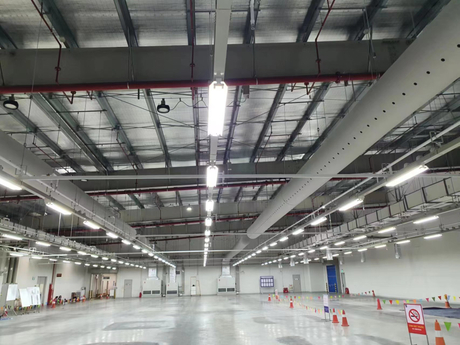
In industrial plant construction, Mechanical, Electrical, and Plumbing (MEP) installation is often the critical path determining the commissioning date. Traditional metal ductwork is notoriously a "slow variable"—requiring a series of serial processes including angle iron flange welding, on-site insulation wrapping, and leak detection, often dragging on for months. Even worse, duct installation is frequently delayed by structural inaccuracies in the civil works, becoming a major bottleneck. Fiber Fabric Ducts are acting as "Schedule Accelerators," shifting ventilation system construction from "on-site manufacturing" to "on-site assembly" through their industrialized prefabrication and dry-mounting characteristics.
The pain point in factory construction lies in "process coupling" and "on-site uncertainty." Metal ducts demand extreme installation precision; even a few millimeters of building deviation can render an entire section scrap. Fabric ducts absorb these variables through BIM parametric design and CNC factory cutting, resolving discrepancies long before arriving at the site. The finished product arrives ready to install—like a tailored suit—requiring only "rail suspension and zipper connection." No hot work, no insulation crews; standard laborers can complete the job after minimal training.
This modular approach unlocks three distinct schedule advantages:
Parallel Construction Windows: Metal ducts typically cannot be installed until the roof is sealed and cable trays are in place. Fabric ducts, however, are largely immune to cross-trade interference and can be installed simultaneously with lighting and fire protection systems, compressing the schedule from a traditional 45 days to just 7–10 days.
Zero-Rework Fault Tolerance: The flexible duct body can absorb ±50 mm of installation error. Dedicated rail systems allow for on-the-fly adjustments,彻底 (completely) eliminating the need for demolition and rework caused by building tolerances.
Minimized Retrofit Downtime: For operating plants undergoing upgrades, fabric ducts enable "weekend installation, Monday production." This compresses potential停产 (shutdown) losses from weeks to under 48 hours—a priceless advantage for manufacturers operating at full capacity.
It is important to note that factory-specific fabric ducts should possess dual certifications for anti-static properties and anti-fungal resistance to withstand the complex temperature and humidity environments of industrial workshops. As policies promoting prefabricated construction gain momentum, fiber fabric ducts are evolving from mere MEP accessories into a critical component of the rapid-build industrial ecosystem—solving the "slow pain" of on-site construction with the precision of industrial manufacturing.

NO999, Sunqiao RD, Pudong area, Shanghai, China

+86 138 1637 7866