Views: 0 Author: Site Editor Publish Time: 2026-08-12 Origin: Site
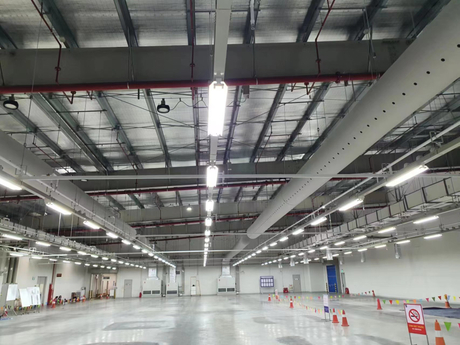
In factory construction decisions, procurement teams often fall into the trap of "low bid acquisition, high-cost operation." Traditional metal ducts may appear inexpensive initially, but their Lifecycle Cost (LCC) is notoriously high. Zinc coating corrosion, insulation water-logging, and gasket aging lead to frequent repairs requiring costly high-altitude work and production shutdowns. These hidden costs often amount to 3–5 times the initial investment. Fiber Fabric Ducts are emerging as the "Invisible Maintenance Engineers" of factory construction,重构 (reshaping) cost logic through a holistic lifecycle perspective.
The operational pain points in industrial plants center on "hidden degradation" and "downtime expenses." Once operational, metal ducts enter a mode of "slow decay": humid environments accelerate galvanic corrosion, and water-saturated insulation adds significant structural load to ceiling supports. More critically, internal dust accumulation is nearly impossible to clean effectively, creating sources of product contamination and dust explosion risks. Fabric ducts break this chain at the material level: specialty polymer fibers offer inherent corrosion resistance and eliminate the need for external insulation, preventing condensation-related degradation. Their smooth, non-dust-collecting surfaces, combined with a fully detachable design, support industrial washing 1–2 times per year, maintaining "factory-new" cleanliness.
This lifecycle value is particularly evident in three scenarios:
Food & Beverage Cleanrooms: Cleaning metal ducts requires risky manual entry with limited effectiveness. Fabric ducts can be entirely removed for washing, achieving post-cleaning standards compliant with ISO 14644. This drastically reduces product scrap rates caused by airborne contamination.
Chemical Corrosion-Resistant Plants: In acidic environments, metal duct lifespans often fall short of five years. Fabric ducts resist acid and alkali corrosion, offering a service life exceeding 10 years. Crucially, replacements require no hot work, minimizing safety risks.
High-Dust Processing Facilities: In facilities like flour mills or woodshops, dust accumulation in metal ducts creates explosion hazards. Fabric ducts support routine removal and cleaning, eliminating dust accumulation at the source and potentially lowering insurance premiums.
It is important to note that factory-specific fabric ducts must pass acid/alkali resistance and accelerated aging tests to ensure long-term reliability in harsh conditions. As ESG (Environmental, Social, and Governance) principles gain traction in manufacturing, fabric ducts are shedding the stereotype of being "cheap but low-quality." They are becoming the "long-termist" choice for cost reduction and efficiency, protecting sustainable profitability with predictable maintenance budgets.

NO999, Sunqiao RD, Pudong area, Shanghai, China

+86 138 1637 7866